VMPL
New Delhi [India], October 13: A hands-on Dabu printing workshop was held in Neerja Modi School for 7th standard students. The aim was to help students learn more about Rajasthan’s rich textile heritage and a traditional craft that has been passed down from generation to generation. The workshop was led by Dheeraj Chhipa, a seventh-generation Dabu printing artisan from Bagru, who introduced students to the traditional art of Dabu printing and explained the various materials and techniques involved in the process. The session was a combination of art, history and practical and allowed students to have a hands-on experience of a craft that they have only read about or seen in pictures.
Dabu printing is the traditional resist printing technique which is closely linked to Bagru town near Jaipur, Rajasthan. It is a process of dyeing in which a special paste is put on specific areas of the fabric prior to the actual dyeing. This paste will not penetrate to the regions covered by it, and so the cloth will have patterns after printing and dyeing. The students were able to learn the process of making the paste from the local resources such as black clay, lime, wheat husk, acacia tree gum and sawdust during the workshop. Chhipa explained the use of these ingredients and how the mixture is applied to the cloth by a wooden printing block.
The students were able to use this technique in practice, which was the best thing about this session. They played with the traditional wooden blocks and made various patterns with them on cloth. It took patience and a steady hand to place each imprint in the proper location and to form the pattern. Students tried different designs such as peacocks, camels, butterflies, and many other adornments. Students loved peacocks and numerous students took inspiration from them for their designs. Others experimented with various designs and combinations and even offered their own designs in the old printing method.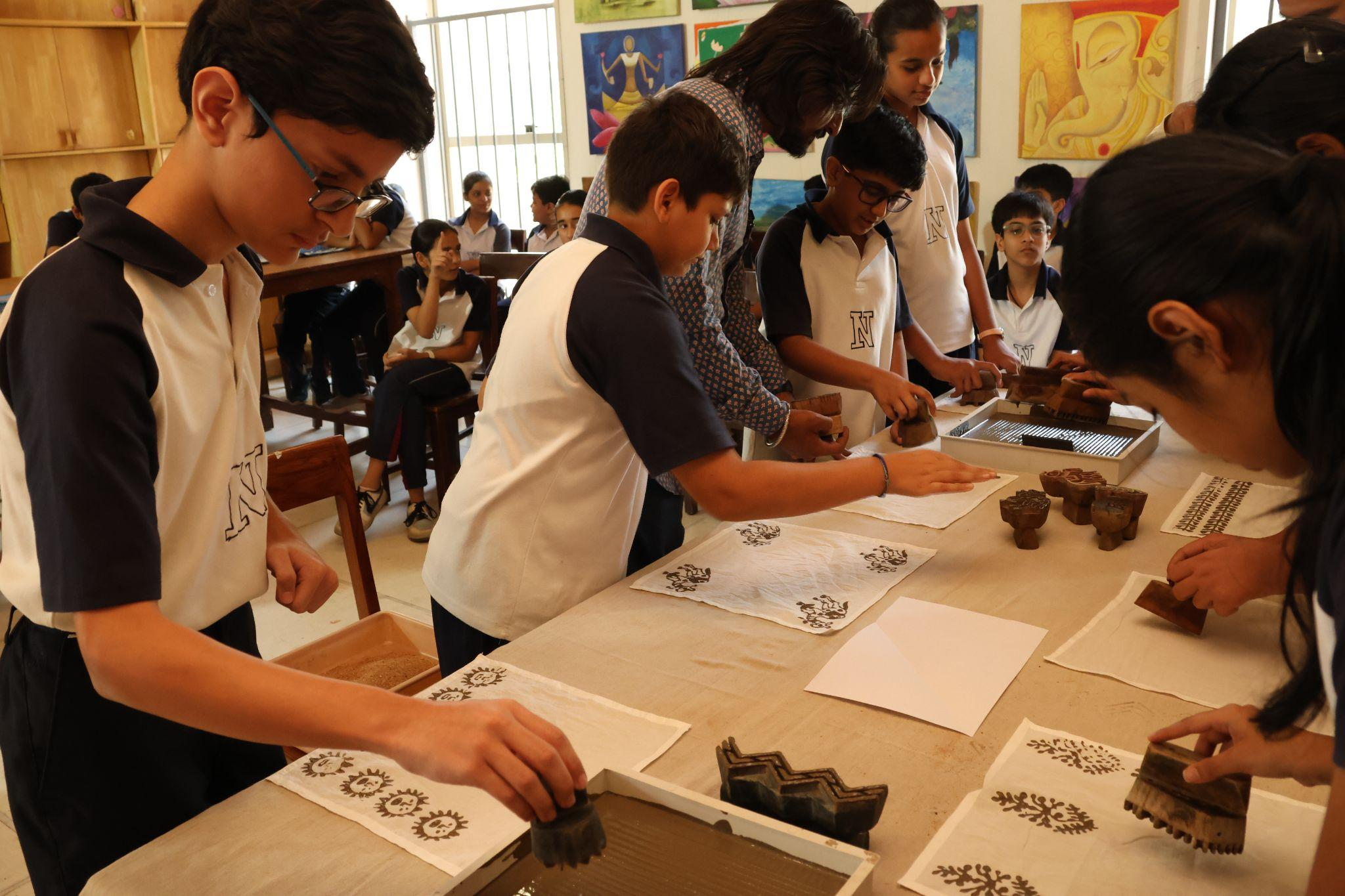
One thing that was memorable in the workshop was when two friends chose to develop a design together. They arranged their piece of cloth side by side and set a butterfly-shaped wooden block on the boundary of the two pieces of cloth. Each student got one half of the butterfly after applying the block to the piece of fabric. When the two pieces were then merged, the whole butterfly came into being. The activity became just a simple illustration of the strength of planning, coordination and collaboration to create something that neither of the students could have done alone. It also added some fun to the learning process.
The workshop was also an introduction to the environmental pitfalls of conventional textile manufacturing. Chhipa spoke on the utilization of natural ingredients and the importance of traditional practices and techniques such as the use of indigo and other natural dyes. Learners were introduced to the knowledge and resources that have been passed down through generations and how craftspeople have exploited them. The presentation also piqued their interest in matters regarding the proper use of materials and the growing importance of sustainability in the textile industry. It was also a chance for many of the participants to witness the importance of older practices in the current debates on environment.
The exchange with a seventh-generation artisan was another added value to it. Chhipa imparted his knowledge of the craft and how to work with such precision in hand block printing. Pupils became aware of the amount of time and practice this requires. They also acknowledged the importance of traditional arts skills being passed down within the artisan family and from one generation to the next. The workshop was a chance to learn more about the people and communities into which these crafts are integrated and that carry them on.
As part of the program, Neerja Modi School, Jaipur provided students with the chance to learn about the cultural traditions of their state and relate it to the things they learned in school. This was not only a historical art lesson, but a lesson where students were able to look at objects and produce their own designs as well as use tools. This experience helped to develop curiosity and creativity, as well as knowledge of traditional craftspeople. It also showed how it could be used to engage students in learning about history, culture and environment in more practical and fun ways, outside the regular classroom.
The students of the Dabu Printing Workshop at Neerja Modi School had learned a new form of art and about the textile crafts of Rajasthan as well. The printed fabrics they made showed the technique they learnt in the session and also their creativity. Most of all, they were made aware of the culture and skills of an art form which is still active in Bagru. The presence of a traditional artisan at the school enabled students to have a valuable interaction with the living heritage of Rajasthan and understand the need to preserve it for future generations.
(ADVERTORIAL DISCLAIMER: The above press release has been provided by VMPL. ANI will not be responsible in any way for the content of the same.)